

Hit enter to search or ESC to close
Local manufacturers often struggle with inconsistent production quality and high operational overheads due to outdated equipment.
Manual or semi-automatic processes in local workshops lead to slow output, making it difficult to meet the rising demand for agricultural and security fencing across the region.
Older machinery often produces irregular weld points or uneven gaps in gabion nets, which compromises the structural integrity of civil engineering projects in Uganda.
Lack of standardized parts and durable components in generic machines results in frequent breakdowns and costly operational pauses for local factory owners.
Poorly calibrated cutting and weaving mechanisms lead to significant wire scrap, increasing the cost of raw materials in a price-sensitive competitive market.
Reliance on skilled manual operators for complex weaving tasks creates a bottleneck and increases the risk of human error in razor barbed wire production.
Uganda's humidity and dust levels accelerate the corrosion and wear of non-industrial grade machinery, shortening the overall equipment lifecycle.
We replace inefficiency with intelligent automation through specialized machinery designed for stability and scale.
Our automatic welded wire mesh machine integrates PLC controls to maximize output speed while maintaining strict precision, eliminating production bottlenecks.
Advanced tensioning and welding systems ensure that every gabion machine output meets international standards for mesh size and weld strength, ensuring project durability.
Utilizing reinforced alloys and wear-resistant coatings, our equipment is built to withstand the operational stresses and environmental conditions typical of East African factories.
Precision cutting and optimized wire feeding mechanisms minimize scrap rates, significantly lowering the cost per meter of finished grassland field fence machine output.
By automating the complex winding and clipping phases of the razor barbed wire machine, we reduce the need for highly specialized labor.
We provide systematic technical training and a reliable spare parts supply chain to ensure maximum uptime and rapid recovery from any mechanical failure.
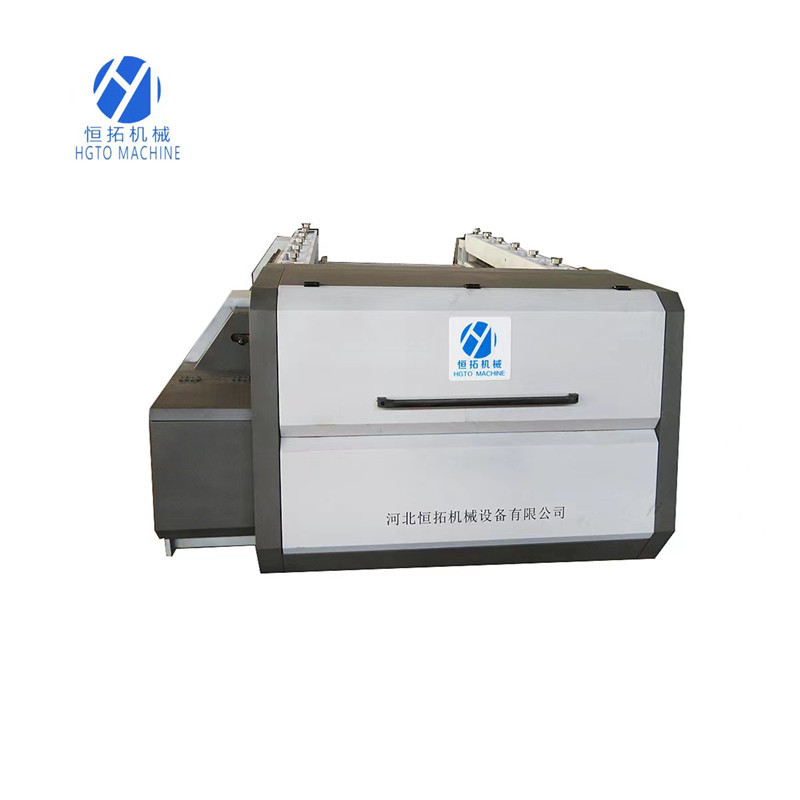


Quantifiable indicators of our industrial capacity and global reach in wire mesh technology.
Analyzing the shift from manual fabrication to industrial automation in the East African corridor.
Uganda's industrial sector is currently undergoing a significant transition, particularly in the production of specialized wire products. With a strong agricultural base and increasing urban infrastructure projects, the demand for security fencing and soil stabilization materials has surged. Traditionally, the market relied on imported finished goods or rudimentary manual weaving. However, there is a growing movement toward local value addition, where entrepreneurs are investing in dedicated manufacturing plants to reduce import costs and create local employment opportunities.
Market trends indicate a sharp rise in the adoption of automation. As labor costs evolve and the need for precision increases, Ugandan manufacturers are moving away from legacy equipment toward integrated production lines. The focus is shifting toward high-efficiency systems that can produce diverse products—from livestock barriers to heavy-duty gabions—on a single platform. This shift is driven by the need for consistency in quality to meet government tender specifications for road construction and riverbank protection projects.
The primary constraint remains the availability of technical expertise for maintaining complex machinery. This creates a significant opportunity for equipment providers who offer not just the hardware, but a complete ecosystem of support, including installation and operator training. The outlook for the next decade suggests that those who integrate smart controls and energy-efficient motors into their prop barbed wire and mesh lines will dominate the regional market by offering better pricing and superior product longevity.
From mechanical prototypes to intelligent, high-speed automated systems.
The industry has moved beyond simple galvanized steel to incorporate polyester (PET) and other composite materials, allowing for specialized applications like fish farming and root baskets that require specific elasticity and corrosion resistance.
Recent advancements in mechanical design have pushed weaving speeds to 20 times per minute for specific net types, drastically reducing the lead time from raw wire to finished roll, increasing factory competitiveness.
Modern machinery now allows for rapid adjustment of mesh size and weave direction, enabling manufacturers to pivot production based on specific client requirements without expensive equipment overhauls.
How technology is reshaping the economics of fencing and containment systems.
Integration of IoT-ready PLC systems that monitor wire tension and weld quality in real-time, alerting operators to anomalies before they result in waste.
The adoption of high-torque, low-energy servo motors is reducing the electricity overhead for 24/7 production lines, critical for regions with unstable power grids.
New production lines are incorporating online coating systems that apply non-toxic, weather-resistant layers directly during the weaving process.
Moving away from monolithic machines toward modular cells that can be reconfigured to switch between different mesh types with minimal downtime.
The overarching trend is the convergence of mechanical robustness and digital precision. In markets like Uganda, where infrastructure is expanding, the ability to rapidly produce high-quality gabion and razor wire is no longer just a competitive advantage—it is a requirement for scalability. Automation reduces the dependency on a dwindling pool of specialized artisans and ensures that every roll of wire meets the strict safety and durability standards required for government and commercial contracts.
Furthermore, the integration of advanced materials like PET is opening new revenue streams for manufacturers. By investing in machinery capable of handling both metallic and polymer wires, factories can diversify their portfolio to include aquaculture nets and erosion control systems, hedging against fluctuations in any single market sector. The future belongs to those who can balance this versatility with the raw throughput of high-speed automated systems.
How our machinery solves real-world production challenges across various Ugandan industries.
A local construction supplier requires massive quantities of gabion baskets for urban drainage and slope stabilization. By implementing our high-speed gabion machine, the supplier transitions from sourcing expensive imports to producing standardized, high-strength mesh locally, reducing project lead times and material costs by optimizing the welding cycle.
Commercial farming cooperatives need durable livestock barriers to prevent predation and trespassing. Utilizing our grassland field fence machine, a local manufacturer can produce rolls of fencing with consistent spacing and strong tension, providing farmers with a reliable, long-term security solution that withstands local weather conditions.
Industrial parks and government facilities require top-tier security perimeters. A specialized factory employs our razor barbed wire machine to automate the clipping and winding process, ensuring each razor coil has a consistent diameter and lethal sharpness, meeting strict security specifications for critical infrastructure.
A startup focusing on sustainable fish farming requires specialized polyester hexagonal netting. By deploying our PET fish farming machines, the venture can produce rot-resistant, flexible mesh that is specifically designed for aquatic environments, enabling the scaling of cage-culture operations without relying on irregular overseas shipments.
A diversified metal workshop seeks to expand its product line to include various welded mesh sizes for domestic use. The installation of our automatic welded wire mesh machine allows them to switch between different mesh apertures rapidly, catering to both small-scale residential needs and larger commercial requests with minimal setup time.
Illustrative scenarios demonstrating the impact of transitioning to automated mesh production.
The transition to an automated welded mesh system eliminated the geometry issues we had with manual weaving. We can now guarantee a perfect 50x50mm mesh for our gabion projects, which has helped us secure larger government contracts for road stabilization.
By automating our razor wire production, we've significantly reduced the labor risk and increased our daily output. The machine's ability to maintain tension consistently means fewer rejected rolls and a much more predictable production schedule.
Moving to PET hexagonal machines for our fish nets changed our business model. We no longer wait for shipments from Asia; we produce what we need in-house, customized to the exact dimensions of our lake cages, drastically reducing our overhead.
Tracing our journey from a specialized workshop to a global leader in wire mesh intelligence.
The origins of our expertise began in 1988, focusing on the fundamental engineering of wire mesh machinery. This era was defined by mastering the mechanical basics of hexagonal weaving and establishing a commitment to quality.
The entity officially became Dingzhou Mingyang Wire Mesh Machine Factory. This period marked a strategic pivot toward professionalizing the production of specialized mesh equipment and expanding the product catalog.
We established Hebei Hengtuo Machinery Equipment Co., LTD., focusing on research and development to push the boundaries of machine speed and material versatility, particularly in synthetic mesh production.
The founding of Hebei Mingyang Intelligent Equipment Co., LTD. represented our commitment to "Industry 4.0," integrating smart controls and high-efficiency automation across all our production lines.
Achieved a milestone in PET hexagonal net machine design, reaching an ultimate speed of 20 times per minute, far surpassing international competitors and setting a new industry benchmark.
Operating from a 30,000 square meter facility, we now serve over 500 customers in 40+ countries, delivering integrated R&D, production, and sales services for the global mesh industry.

Answers to common technical and commercial questions for operators in Uganda.
The primary difference lies in the control of the welding and cutting cycles. Standard machines often require manual positioning and timing, whereas an automatic welded wire mesh machine utilizes PLC (Programmable Logic Controller) systems to synchronize wire feeding, welding, and cutting. This results in significantly higher production speeds, precise mesh dimensions, and a reduction in human error, which is critical for maintaining quality in large-scale industrial output.
Capacity should be determined by calculating your required weekly linear output of mesh against the machine's weaving speed (cycles per minute). You must also consider the wire gauge you intend to use, as heavier gauges may slow down production. For Ugandan infrastructure projects, we recommend accounting for a 15% buffer in capacity to accommodate potential power fluctuations and routine maintenance without affecting delivery deadlines.
Yes, but the machinery must be specifically designed for the material's properties. For example, our PET hexagonal net machines use different tensioning and weaving mechanisms compared to those used for galvanized steel. While some machines are versatile, we recommend dedicated lines for polymer and metallic wires to maximize efficiency and prevent contamination or damage to the weaving components caused by varying material hardness.
In humid environments like Uganda, the primary concerns are corrosion and lubricant degradation. We recommend a strict weekly lubrication schedule for all moving joints and the use of industrial-grade anti-corrosive grease. Additionally, the electrical cabinets should be kept sealed and dry. Regular inspection of the clipping blades is essential, as humidity can accelerate wear, leading to inconsistent razor coil diameters if not addressed promptly.
While the initial investment for an automated line is higher than manual equipment, the TCO is typically lower over a 3-5 year period. This is achieved through a massive reduction in labor costs per unit, a significant decrease in raw material waste, and higher product consistency which reduces costly client rejections. Automation allows for 24/7 operation with minimal staffing, shifting the cost structure from variable labor to a fixed, depreciable asset.
The first step is a detailed technical requirement analysis. You must define the specific wire diameters, mesh sizes, and daily output goals. Once these parameters are set, we can recommend the appropriate machine configuration. Following this, factory layout planning is crucial to ensure a smooth flow from raw wire decoiling to final roll packaging, minimizing internal handling and maximizing the efficiency of the automation.
Whether you are upgrading an existing workshop or establishing a new industrial plant, our team provides the engineering expertise and high-performance machinery needed to dominate the local market. From customized gabion solutions to automated razor wire lines, we help you achieve international quality standards with optimized operational costs. Contact us today to discuss your specific technical requirements and production goals.
Discuss Your Requirements


