Hit enter to search or ESC to close
When specifying civil engineering projects for erosion control or riverbank stabilization, the precision of the weave in a gabion wire mesh machine becomes the deciding factor for structural longevity. Many operators struggle with inconsistent mesh sizing or premature wear in the twisting mechanism, which can lead to cage failure under heavy stone loads. Achieving a stable, high-strength hexagonal structure requires more than just raw power; it demands an integrated approach to mechanical timing and servo-controlled precision.
The reliability of these machines is critical because gabion baskets must withstand harsh environmental pressures. Unlike standard fencing, the specialized twisting required for stone cages prevents the mesh from unraveling. This technical requirement distinguishes high-capacity equipment from basic wire weavers and places it within a broader ecosystem of production including Automatic Chain Link Fence Making Machines and Construction Mesh Machines, where structural integrity is the primary performance metric.
By analyzing the transition from mechanical cams to PLC-driven servo systems, this guide explores how modern engineering minimizes downtime and maximizes output accuracy. Whether you are upgrading a production line or establishing a new facility, understanding the intersection of servo motor control and heavy-duty rack design is essential. We will examine how a professional gabion wire mesh machine transforms raw galvanized wire into high-performance geotechnical containment systems.


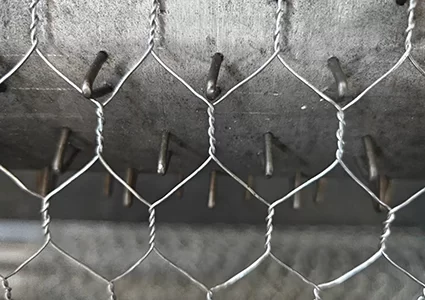
The fundamental operation of a heavy-type gabion wire mesh machine revolves around the precise twisting of thick-gauge wires to form a hexagonal pattern that locks under tension. Unlike simple weaving, gabion production requires a "twist" that ensures the mesh does not slide when filled with rock. This is achieved through a coordinated movement of the weaving head and the pulling mechanism, ensuring the wire diameter (typically ranging from 2.0mm to 4.0mm) is handled without deformation.
Modern high-capacity systems utilize an integrated double rack design, which provides a more streamlined and stable structure during high-speed operation. By distributing the power across front and rear racks, the machine reduces vibration, which is the primary cause of mesh irregularity in lower-end equipment. This structural stability allows for the consistent production of mesh widths up to 600mm and beyond, depending on the customization requirements of the project.
To maintain a strict mesh size, such as 5070mm or 80100mm, the timing of the thorn shaft is paramount. Traditional electronic cam programming is often cumbersome and slow to debug; therefore, moving toward servo motor power sources allows for arbitrary switching between intermittent and continuous rotation. This flexibility ensures that the number of twists (3, 5, or 7) can be adjusted via the PLC with a single key press, eliminating the need for manual mechanical realignment.
The use of timed circulation lubrication systems in fully enclosed oil tanks prevents dust and metallic impurities from entering the motion mechanism, which is the most effective way to prevent premature wear and ensure machining accuracy during 24/7 production cycles.
Furthermore, the weight of the main engine—often exceeding 18 tons in professional setups—acts as a dampener against the kinetic energy generated during the weaving process. This mass, combined with self-processed core components, ensures that the high-tension pull required for 4.0mm wire does not cause the frame to flex, maintaining the geometric integrity of every hexagonal cell across the entire width of the mesh.
Transitioning from traditional gearing to servo-motor-driven axes transforms the gabion wire mesh machine from a rigid tool into a flexible production platform. In practical terms, this means the operator can adjust the equipment in any operating state at any position. This eliminates the "stop-and-wait" cycle typically associated with mechanical timing adjustments, significantly reducing the setup time for different mesh specifications.
Servo integration allows for the precise control of dual-twist data within the PLC, enabling the seamless transition between 3, 5, and 7 twists without stopping the machine, which directly increases the total daily tonnage of finished mesh.
For the manufacturer, this technical evolution reduces the reliance on highly specialized manual technicians for debugging. Since the movements are software-defined, the machining accuracy is higher and the weaving speed is faster, leading to a lower cost per linear meter of mesh. This efficiency is particularly valuable when fulfilling large-scale government infrastructure contracts where delivery timelines are strict.
Production speed and output volume vary significantly based on the mesh size and wire diameter selected. Heavier wires (closer to 4.0mm) require higher torque and slower weaving speeds to prevent wire breakage and ensure twist security. Conversely, smaller mesh sizes allow for faster cycles but require tighter PLC tolerances to prevent the weave from drifting.
When comparing different configurations, the relationship between the number of twists and the resulting stability of the cage becomes evident. While a 3-twist weave is faster to produce, a 7-twist weave provides the maximum structural rigidity for high-pressure underwater applications, although it slightly reduces the overall weaving speed due to the increased mechanical cycle time.
The mesh produced by these machines is primarily deployed in geotechnical engineering for riverbank armor, coastal defense, and slope stabilization. The ability to customize the mesh width and size allows engineers to create baskets that fit specific terrain contours, preventing soil erosion and managing water flow velocities in flood-prone regions.
Beyond traditional river works, these machines support the production of specialized root baskets for reforestation and retaining wall systems in urban construction. The high tensile strength of the woven wire, coupled with galvanized coatings, ensures that the containment system remains intact for decades, even when exposed to saline environments or acidic soil conditions.
The industry is moving toward "intelligent weaving," where the integration of IoT sensors can monitor wire tension in real-time. This allows the PLC to automatically compensate for variations in wire diameter from the supplier, ensuring that the mesh size remains constant regardless of slight raw material inconsistencies.
We are also seeing a shift toward multi-material compatibility. While galvanized steel remains the standard, there is an increasing demand for PET-coated and polyester-coated wires for specialized aquatic environments. This requires machines with adjustable tensioners and non-marring guides to prevent the coating from stripping during the high-pressure twisting process.
Furthermore, the integration of automatic cutting and spring-winding machines into a single production line is reducing manual labor costs. By automating the transition from woven roll to finished basket, manufacturers can scale their output without a proportional increase in headcount, focusing instead on quality control and export logistics.
The most frequent challenge in gabion production is the "unraveling" of the twist, usually caused by improper timing or inadequate lubrication. When the thorn shaft rotation is not perfectly synchronized with the wire feed, the twist becomes loose, compromising the entire basket's strength. This is why servo-driven rotation is superior to mechanical cams.
Another critical issue is the wear and tear on the weaving head. Because the machine processes heavy-gauge wire under immense tension, the contact points are subject to extreme friction. Implementing a timed circulation lubrication system is the only viable long-term solution to maintain machining accuracy over millions of cycles.
Finally, optimizing the power distribution across the dual racks is essential for maintaining speed. When both the front and rear racks have independent power sources, the machine can maintain higher weaving speeds without risking the structural misalignment that often plagues single-rack designs.
| Feature | Heavy-Type PLC | Standard Mechanical | Impact on Quality |
|---|---|---|---|
| Power Source | Servo Motors | AC Motors/Gears | Higher Accuracy |
| Control System | PLC Programmable | Mechanical Cam | Faster Setup |
| Rack Design | Integrated Double | Single Frame | Lower Vibration |
| Lubrication | Timed Circulation | Manual Greasing | Longer Lifespan |
| Twist Adjustment | One-Key Switch | Manual Rebuild | Increased Flexibility |
| Engine Weight | Over 18 Tons | Under 10 Tons | Better Stability |
The primary difference is structural rigidity and production speed. A 7-twist weave provides significantly higher resistance to unraveling and can withstand greater internal pressure from stone fill, making it ideal for high-stress river projects. However, it requires more mechanical movement per cell, which slightly reduces the weaving speed compared to a 3-twist weave. Professional PLC machines allow you to switch between these options with a single key press.
The heavy-type gabion machine is specifically designed for wire diameters between 2.0mm and 4.0mm. While customization is possible, exceeding 4.0mm requires significant modifications to the main engine weight and torque capacity of the servo motors to prevent frame flexion and ensure the twist is fully secured. We recommend consulting technical parameters to ensure the motor power (typically 33-45kw) matches your specific wire gauge.
The integrated double rack design distributes the mechanical load across two powered frames. This reduces the center of gravity and minimizes the vibration that typically occurs during the high-tension pulling phase of the weave. By eliminating these micro-vibrations, the machine maintains a much more consistent hexagonal cell size across the entire width of the mesh, preventing "drifting" in the pattern.
The system uses fully enclosed lubricating oil tanks with timed circulation. Maintenance primarily involves monitoring the oil levels and periodically replacing the filters to ensure no metallic dust enters the motion mechanism. Because the system is timed and automated, it removes the risk of human error associated with manual greasing, which is the leading cause of mechanical failure in weaving heads.
Changing the mesh size on a servo-driven PLC machine is significantly faster than on mechanical versions. Since the rotation states of the thorn shaft are software-controlled, you can adjust the timing and twist data via the interface without stopping for extensive mechanical realignment. In most cases, the transition between standard sizes like 5070mm and 80100mm can be handled in a fraction of the time required by cam-based systems.
Yes, but it requires specific adjustments to the guide rollers and tensioning system to avoid scratching the coating. While the core mechanical logic remains the same, producing polyester-coated wire for aquatic environments requires precise control over the pulling speed to maintain the integrity of the polymer layer. We offer customized configurations for manufacturers focusing on the PET material fish netting and hexagonal mesh markets.
Selecting the right gabion wire mesh machine is a balance between raw structural capacity and precise electronic control. The transition toward servo-driven, double-rack systems has effectively solved the historical issues of mesh inconsistency and excessive downtime. By focusing on the integration of PLC-controlled twisting and timed circulation lubrication, manufacturers can ensure a stable output of high-strength stone cages that meet the rigorous demands of modern geotechnical engineering.
For businesses looking to optimize their production line for better accuracy and higher weaving speeds, prioritizing equipment with a heavy-duty frame and servo-axis control is the most sustainable path to growth. If you have specific requirements for mesh dimensions or wire gauges, exploring customized industrial solutions can help align your production capacity with project demands. For more technical details and equipment configurations, visit www.htmeshmachines.com to find the system that fits your operational goals.