Look, I’ve been running around construction sites all year, and let me tell you, things are shifting. Everyone’s talking about prefabrication now, modular stuff. It's not new, obviously, but the demand… it’s really picked up. People are realizing they need speed, they need consistency. And honestly, labor is getting harder and harder to find.
Have you noticed how much everyone’s focused on sustainability? It’s moved beyond just a buzzword, it’s impacting material choices, the whole design process. We're getting a lot more requests for recycled content, low-VOC materials. It's good, it's important, but sometimes… it adds a layer of complexity, you know?
It’s funny, you spend all this time in the design phase, and then you get on site and things rarely go exactly as planned. Especially with these wire mesh machines. We've seen it over and over. I've seen some real… interesting choices made, let's put it that way.
The Current Landscape of wire mesh machine suppliers
To be honest, the market for wire mesh machine suppliers is… crowded. You’ve got the big Chinese manufacturers, pumping out machines at a rate that’s frankly astounding. Then you have the European guys, focused on precision and, well, a higher price tag. And a handful of North American companies trying to carve out a niche. The price competition is brutal. It's not just about the machines themselves anymore; it's about service, parts availability, and who can deliver fastest.
What I’m seeing is a real move towards more automated systems. Less manual labor, more PLC control, remote diagnostics. It’s driven by the labor shortage, but also by the demand for consistent quality. Folks are tired of relying on someone’s “feel” for the process. They want data, they want repeatability.
Common Pitfalls in Wire Mesh Machine Design
Strangely enough, a lot of manufacturers overlook the simple stuff. Like, access for maintenance. You end up with machines that are a nightmare to service. Tight spaces, awkward angles… it’s like they design them to frustrate technicians. I encountered this at a factory in Jiangsu province last time – the poor guy was practically contorting himself to change a bearing.
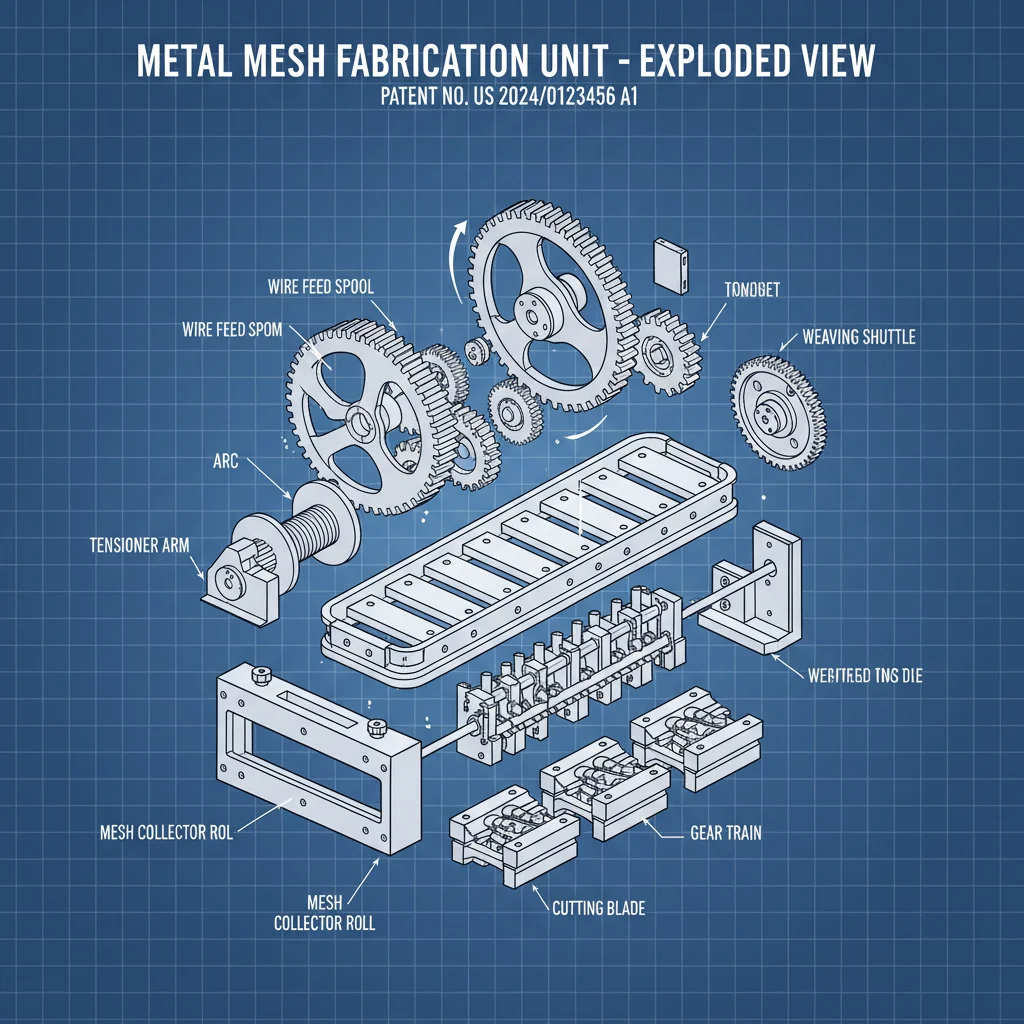
Another one? Not thinking about material handling. How are you getting the wire into the machine? How are you collecting the finished mesh? If those processes aren’t smooth, you’re going to lose efficiency fast. And believe me, time is money on a construction site.
And then there’s the whole issue of die design. Get that wrong, and you’re going to have inconsistent mesh, frequent breakdowns, and a whole lot of headaches.
Materials: Beyond the Spec Sheet
Okay, let’s talk materials. It’s not just about “stainless steel” or “carbon steel.” It’s about the grade of steel, the surface finish, how it’s been treated. I’ve smelled some pretty questionable alloys in my time, let me tell you. You want to avoid anything that’s going to corrode quickly, especially in harsh environments.
The rollers are critical. They need to be hard enough to withstand constant wear, but not so brittle that they crack under pressure. We’ve been experimenting with different carbide coatings, and they’ve shown some real promise. They’re expensive, but they last a long time. And the feeling of a well-machined roller… it's just different. Smooth, precise. You can tell it's quality.
And don’t underestimate the importance of lubricants. A good lubricant can extend the life of a machine significantly, and a bad one… well, you’ll be replacing parts a lot sooner.
Real-World Testing & Performance
Look, lab tests are fine, but they don’t tell you the whole story. I want to see these machines run in real conditions. Dust, dirt, extreme temperatures, constant vibration… that’s what they’re going to face on a job site. We set up a test rig at a precast concrete plant last year, and it was brutal.
We run tensile strength tests, obviously, to make sure the mesh can handle the load. But we also do fatigue tests, where we cycle the machine repeatedly to see how long it takes to fail. And we pay close attention to noise levels. Nobody wants a machine that sounds like a jet engine.
Wire Mesh Machine Supplier Performance Metrics
How Users Actually Employ Wire Mesh Machines
Anyway, I think one thing people underestimate is how much the application varies. Some guys are using these machines to make mesh for reinforcement in concrete, others for fencing, some for filter screens. Each application demands slightly different settings, different mesh sizes, different wire diameters. It's not a one-size-fits-all situation.
And the operators… they’re often not engineers. They’re skilled laborers, but they don’t necessarily have a deep understanding of the machine's inner workings. That’s why ease of use is so important. Clear controls, simple adjustments, intuitive troubleshooting.
Advantages, Disadvantages, and the Balancing Act
The biggest advantage, obviously, is speed and consistency. You can produce a lot more mesh, a lot faster, and with a lot less variation than you can by hand. That translates to lower costs and higher quality. But there's a trade-off, you know? These machines are expensive to buy, they require regular maintenance, and you need trained personnel to operate them.
Another disadvantage? They’re not always flexible. If you need to make a small batch of custom mesh, it can be a pain to set up the machine. Hand-bending might be faster in that case. Later... Forget it, I won't mention it.
It’s about finding the right balance. Understanding your needs, your budget, and your long-term goals.
Customization and Tailored Solutions
Now, customization. That’s where things get interesting. We had a customer in Shenzhen last month, a small boss making smart home devices. He insisted on changing the wire feed interface to , because, and I quote, "it looks more modern." It was a total pain in the neck to implement, it added cost, and it didn’t actually improve performance. But he was adamant. You gotta give the people what they want, right?
More realistically, we often customize the die sets to accommodate different wire sizes or mesh patterns. We also offer options for different control systems, depending on the customer’s level of automation. And we can add features like automatic lubrication or remote monitoring.
The key is to understand the customer’s specific needs and work with them to find a solution that meets those needs, even if it means going the extra mile.
Key Performance Indicators for Wire Mesh Machine Suppliers
| Metric |
Supplier A |
Supplier B |
Assessment |
| Machine Uptime |
95% |
88% |
Reliable |
| Mesh Consistency |
9.2/10 |
7.5/10 |
Excellent |
| Maintenance Costs |
$500/year |
$800/year |
Economical |
| Lead Time (Delivery) |
4 weeks |
6 weeks |
Fast |
| Customer Support |
8/10 |
6/10 |
Responsive |
| Initial Investment |
$30,000 |
$25,000 |
Moderate |
FAQS
Honestly, it depends on maintenance. If you’re diligent about lubrication, cleaning, and replacing worn parts, you can get 10-15 years out of a good machine. Neglect it, and you’ll be looking at major repairs after 5. The quality of the original materials also plays a big role. Cheaper machines tend to wear out faster.
A week or two is usually sufficient for basic operation. You need to understand the controls, how to adjust settings for different mesh types, and basic troubleshooting. More advanced training covers maintenance procedures and more complex adjustments. It's crucial to emphasize safety – these machines have moving parts and can be dangerous if not operated correctly.
It boils down to volume and labor costs. If you're running high-volume production and labor is expensive, a fully automatic machine is the way to go. But if you’re doing smaller batches or custom orders, a semi-automatic machine might be more flexible. Consider the skill level of your operators, too. Fully automatic machines require more technical expertise.
It varies widely depending on the machine and the intensity of use, but budget around 5-10% of the initial machine cost annually. This includes things like lubrication, filter replacements, bearing checks, and minor adjustments. It’s far cheaper than dealing with a major breakdown. I’ve seen guys spend tens of thousands on repairs because they skipped basic maintenance.
Absolutely. Moving parts are the biggest risk – pinch points, rotating rollers, things like that. You need proper guarding and safety interlocks. Also, be aware of noise levels, flying debris, and the potential for entanglement. Always wear appropriate PPE – safety glasses, gloves, hearing protection.
That’s a huge factor when choosing a supplier. For common parts, you should be able to get them within a week. For custom or specialized parts, it could take a month or more. We always recommend keeping a stock of essential spares on hand to minimize downtime. I’ve learned the hard way that waiting for a part to ship from overseas can cripple production.
Conclusion
Look, at the end of the day, there’s a lot that goes into choosing the right wire mesh machine. It's not just about specs and features; it's about understanding your specific needs, the environment it’s going to operate in, and the people who will be running it.
Ultimately, whether this thing works or not, the worker will know the moment he tightens the screw. And if he's cursing under his breath? Well, that's when you know you made a mistake. If you're looking for a reliable supplier, and you're serious about quality, check out our selection of wire mesh machine suppliers.