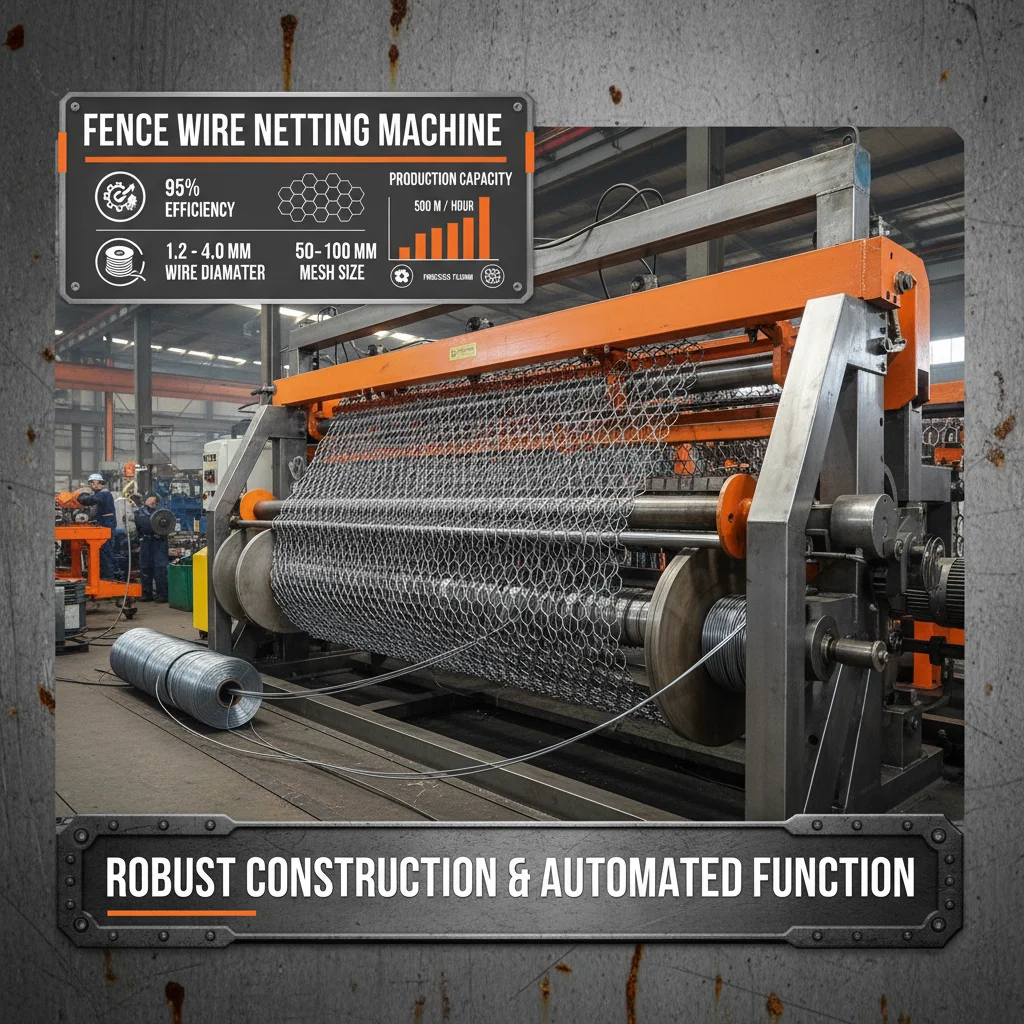
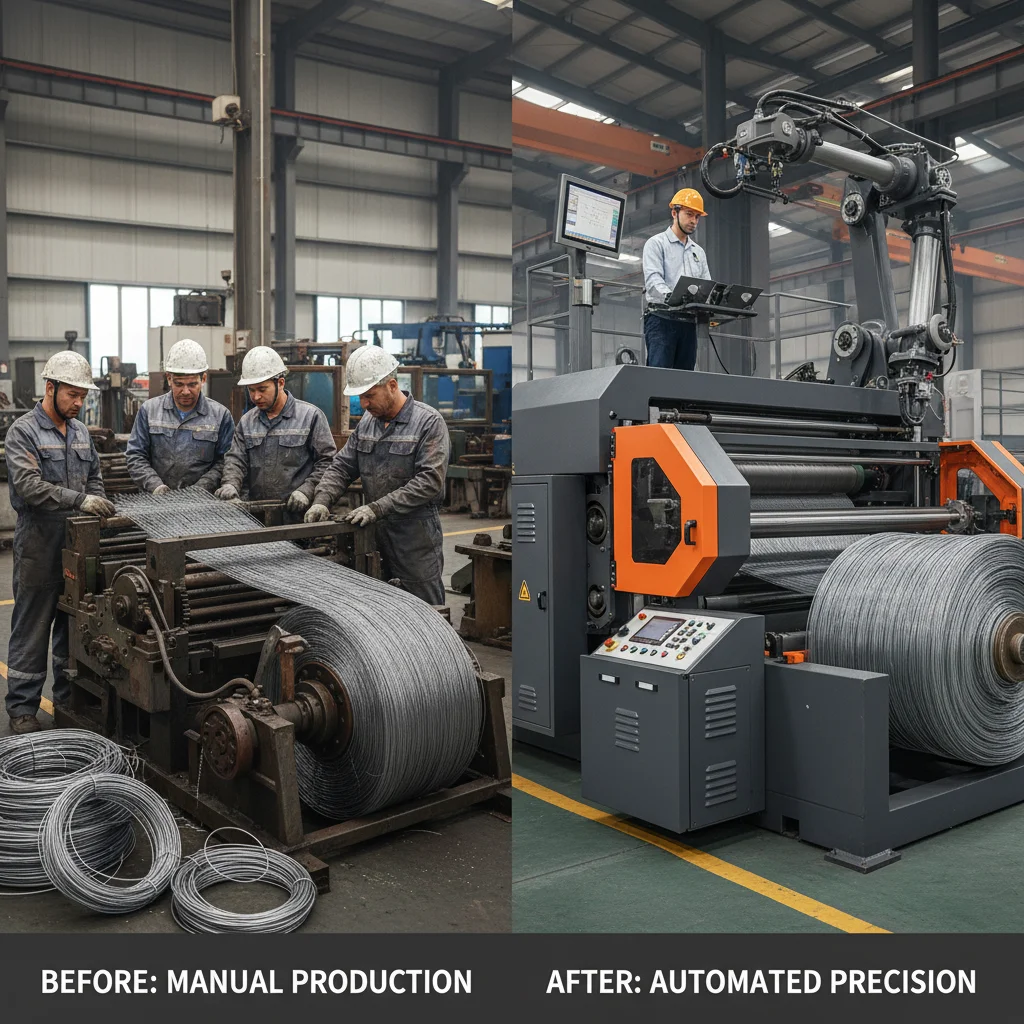
You know, been running around construction sites all year, breathing in dust and dealing with all sorts of headaches. Lately, everyone’s talking about prefabrication and modular builds. Seems like the whole industry’s chasing efficiency, trying to cut down on waste and time. Honestly, it's a bit of a scramble. Everyone wants it yesterday, but getting the quality right…that’s the kicker.
It’s funny, you spend so much time designing on paper, thinking you’ve got it all figured out, but then you get to the site and…things are different. Really different. The tolerances, the way things actually fit together…have you noticed how often the drawings just don't match reality? Anyway, I think a lot of folks underestimate the importance of getting the details right upfront.
The Current Landscape of Wire Mesh Machine Manufacturing
The demand for quality wire mesh is through the roof, honestly. It’s not just construction anymore, it's everything from agriculture to security. You've got your big players, mostly based in China, pumping out volume. But, and this is a big but, quality control can be…spotty. I encountered this at a factory in Jiangsu province last time – beautiful machines, impressive scale, but the consistency just wasn’t there. They were churning out mesh, but it didn’t hold the tolerances we needed for a demanding project.
Strangely, there’s a resurgence in smaller, more specialized manufacturers. They can’t compete on price, but they can deliver on precision and customization. It’s about finding the right balance. It’s a global game, with manufacturers in Europe and the US still holding their own in niche markets.
Common Pitfalls in Design & Engineering
A huge mistake I see all the time is overlooking the wire gauge. People get hung up on aperture size, which is important, but if the wire itself is too thin, the whole thing just loses its structural integrity. Then you've got the weaving pattern – plain weave is cheap and cheerful, but for anything demanding, you need to think about twill or Dutch weave. It's all about the application, right?
And honestly, software simulations only get you so far. You *have* to build prototypes and test them in real-world conditions. Another thing? Edge treatments. If the edges aren’t finished properly, the mesh will unravel faster than you can say “warranty claim”.
To be honest, a lot of engineers just don't spend enough time on the shop floor. They design in a vacuum, and then wonder why things don't work when they hit production.
Materials: A Hands-On Perspective
You’ve got your stainless steel – 304 is the workhorse, good corrosion resistance, easy to weld. But if you're dealing with harsh chemicals, you need 316. I can tell the difference just by the smell, honestly. 316 has a slightly…metallic tang. It’s subtle, but it's there. Galvanized steel is still popular for cost reasons, but it’s getting a bad rap due to environmental concerns.
Then you have things like titanium and specialized alloys. Expensive, yes, but worth it for demanding applications. I remember handling titanium mesh once – it felt…different. Lightweight, almost silky smooth. But you have to be careful welding it, it's a completely different ballgame. Aluminum is also used, particularly in architectural applications, but it doesn’t have the same strength as steel.
The feel of the material is important. A good operator can tell you a lot about the quality just by running their hand over it. It's a skill that's getting lost, sadly.
Real-World Testing & Performance
Forget the lab. I mean, lab tests are useful for baseline data, but they don’t tell the whole story. We test for tensile strength, shear resistance, corrosion resistance, all that stuff. But then we take it to the site and beat it up. We’ll bury it in the ground, expose it to salt spray, subject it to extreme temperatures. You need to see how it performs under *actual* conditions.
I had a client once who insisted on a ridiculously cheap mesh for a coastal project. I warned him it wouldn’t last, but he wouldn’t listen. Six months later, it was a rusted mess. Cost him a fortune to replace.
Wire Mesh Performance Metrics
How Clients Actually Use Wire Mesh Products
It's always interesting to see how people adapt things. We designed a mesh for ventilation systems, thinking it would be used in industrial settings. Turns out, a lot of it ended up in high-end residential projects, used as decorative screens. People are creative, you know?
Another common application is filtration. Water treatment plants, chemical processing… they all need high-quality mesh to remove impurities. It’s a vital part of keeping things clean and safe.
Advantages, Disadvantages, and Customization
The beauty of wire mesh is its versatility. It’s strong, lightweight, and relatively inexpensive. You can customize it in countless ways – aperture size, wire gauge, weave pattern, material, finish. I had a client who needed a mesh with a specific color to match their branding. It wasn’t cheap, but we got it done.
But it's not perfect. It can be susceptible to corrosion, especially in harsh environments. And if it's not properly installed, it can sag or deform. The biggest disadvantage is that it offers little thermal or acoustic insulation, something people often overlook.
A Shenzhen Story & Practical Considerations
Last month, that small boss in Shenzhen who makes smart home devices insisted on changing the interface to on our mesh enclosures. The original design had USB-A, which was perfectly functional, but he was convinced was the future, and it would “elevate the product.” The result? It added two weeks to the lead time, increased the tooling cost by 20%, and, frankly, didn’t make a noticeable difference in sales. He learned a valuable lesson about sticking to what works.
Anyway, I think the key takeaway is this: wire mesh is a simple product, but it's full of subtle complexities. It’s about understanding the application, choosing the right materials, and paying attention to the details.
And ultimately, whether this thing works or not, the worker will know the moment he tightens the screw.
Summary of Key Factors Influencing Wire Mesh Machine Selection
| Machine Capacity (sq m/hr) |
Material Compatibility |
Automation Level |
Maintenance Requirements |
| 50-100 |
Steel, Stainless Steel |
Semi-Automatic |
High - Daily Lubrication |
| 120-180 |
Steel, Aluminum |
Fully Automatic |
Medium - Monthly Checks |
| 80-150 |
Stainless Steel, Titanium |
Semi-Automatic |
Medium - Quarterly Maintenance |
| 200-250 |
Steel, Galvanized Steel |
Manual |
Low - Occasional Cleaning |
| 60-120 |
Copper, Brass |
Semi-Automatic |
High - Frequent Inspections |
| 150-200 |
Steel, Stainless Steel, Aluminum |
Fully Automatic |
Low - Annual Servicing |
FAQS
Maintaining consistent aperture size boils down to controlling several factors: wire tension, die precision, and machine calibration. We’ve found that even slight variations in wire diameter can throw everything off. Regular inspections and precise adjustments are crucial, but it's a constant battle, honestly. It’s not something you can just set and forget.
Plain weave is the simplest and most cost-effective, but it’s not the strongest. Twill weave offers greater strength and a tighter structure, making it ideal for filtration. Dutch weave has a very open structure but is surprisingly durable due to the way the wires interlock. Choosing the right pattern really depends on the intended application and load requirements.
Even stainless steel isn’t immune to corrosion. Chloride exposure, particularly in marine environments, is a major culprit. Also, improper fabrication or welding can create localized corrosion points. The grade of stainless steel matters too – 316 offers better corrosion resistance than 304, but it’s more expensive. Proper surface passivation is also essential.
Wire gauge is determined by the load and stress the mesh will be subjected to. Higher gauge numbers mean thinner wires. You need to consider the tensile strength requirements and the expected impact forces. Consulting with a materials engineer is always a good idea, especially for critical applications. There are formulas, but real-world testing is always best.
Automation boosts production speed, improves consistency, and reduces labor costs. Automated machines can maintain tighter tolerances and perform complex weaves that would be difficult or impossible to achieve manually. However, automation requires a significant upfront investment and skilled technicians for maintenance and programming. It’s not a one-size-fits-all solution.
Absolutely. We offer a variety of coatings, including epoxy, polyester, and PVC, to enhance corrosion resistance, improve aesthetics, or provide electrical insulation. We can also apply specialized finishes like polishing or electropolishing. Just last week, a customer asked for a mesh coated with a bioluminescent material – that was a new one! It’s all about finding the right solution for their needs.
Conclusion
So, what have we learned? Wire mesh manufacturing is a deceptively complex field. It’s not just about weaving wires together; it’s about understanding materials, mastering processes, and anticipating real-world conditions. The industry is evolving rapidly, with a growing demand for higher quality, greater customization, and more sustainable practices.
Looking ahead, I think we’ll see even more automation, driven by the need to reduce costs and improve efficiency. But ultimately, the success of any wire mesh product will depend on the skill and experience of the people who make it. And, whether this thing works or not, the worker will know the moment he tightens the screw.