Hit enter to search or ESC to close
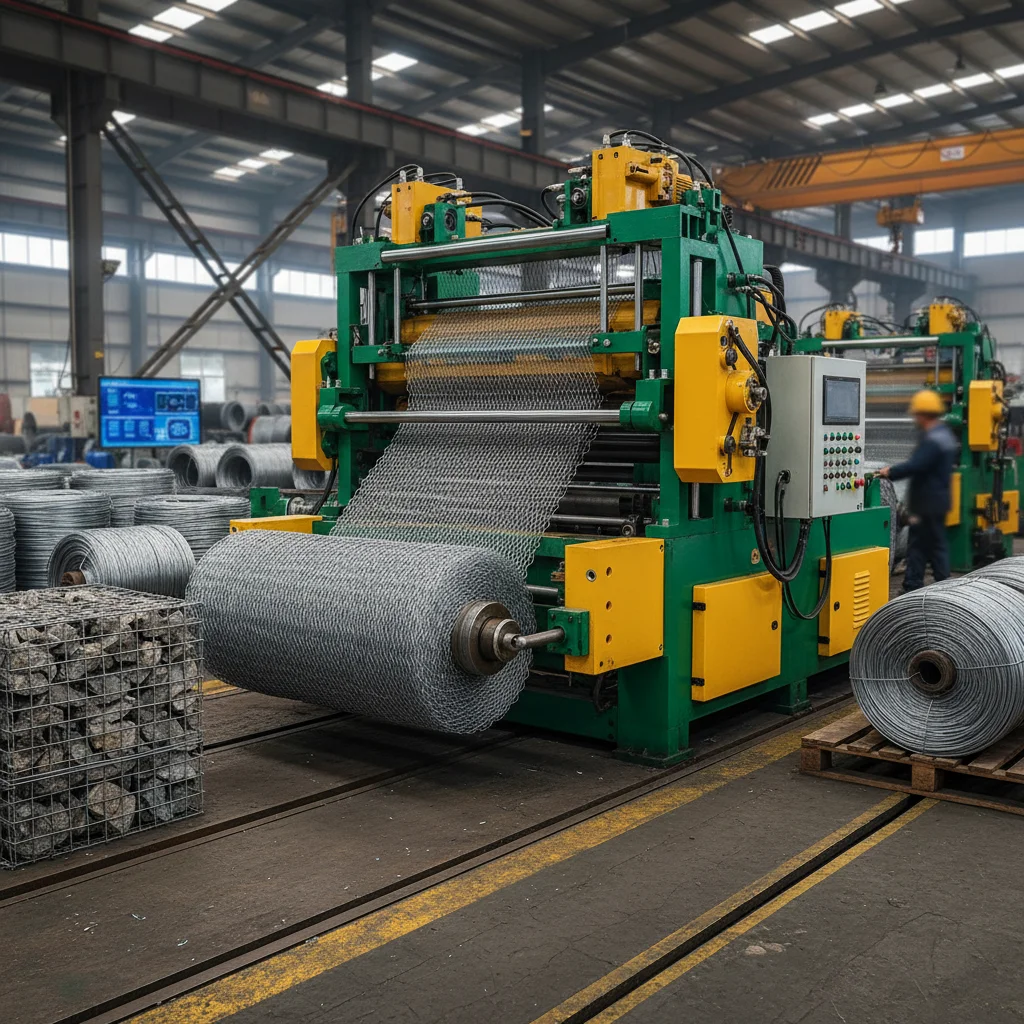
The global demand for sustainable erosion control and flood defense has led to a critical re-evaluation of the machinery used to produce heavy-duty containment systems. In particular, the efficiency of the gabion wire mesh machine has become a focal point for civil engineering contractors seeking to reduce production lead times while maintaining strict structural integrity.
The challenge lies in the mechanical stress associated with weaving heavy-gauge galvanized wire, where traditional cam-driven systems often struggle with precision and rapid adjustment. As project specifications move toward more customized mesh sizes and higher twist densities for increased stability, the industry is shifting toward PLC-controlled automation to eliminate human error and mechanical drift during long production runs.
This technical analysis examines the transition from manual configuration to intelligent weaving systems, focusing on how integrated servo controls and patented rack designs are optimizing the output of professional-grade gabion systems. For those evaluating equipment upgrades, understanding the relationship between PLC precision and weave consistency is essential for operational scaling.


The structural foundation of a heavy-type weaving system must manage immense torque and tension. The integration of a dual-rack design—where both the front and rear racks are powered—distributes the mechanical load more evenly across the machine frame. This reduces vibration and prevents the frame warping that often occurs in single-rack legacy systems when processing wire diameters up to 4.0mm.
Furthermore, the use of a patented integrated double rack streamlines the movement space required, enhancing the stability of the weaving process. By housing the motion mechanism within a rigid, high-mass frame (often exceeding 18 tons for the main engine), the system minimizes inertial oscillations, which is critical for maintaining a consistent mesh size of 50x70mm or 80x100mm.
In gabion production, the wire diameter (ranging from 2.0mm to 4.0mm) directly dictates the tensile strength of the finished cage. However, increasing wire thickness typically increases the friction and resistance within the machine. To counteract this, the use of timed circulation lubrication via fully enclosed oil tanks ensures that the motion mechanism remains clean and friction-free, preventing dust and impurities from causing premature wear.
The number of twists—configurable between 3, 5, and 7—is not merely a specification but a structural requirement for the mesh's shear resistance. A higher twist count increases the locking force between wires, which is vital for riverbank stabilization projects. The ability to switch these twist settings via a PLC interface allows operators to adapt to different regional engineering standards without extensive mechanical teardowns.
Mesh width flexibility (up to 5600mm or customized) allows for the production of large-format gabion sheets. When scaling width, the synchronization between the dual racks becomes the primary engineering challenge; any deviation in timing can lead to uneven tension and skewed mesh geometry, which would result in the failure of the cage during stone filling.
Traditional gabion machinery relied heavily on electronic cam programming, which required complex and time-consuming debugging processes to change the rotation states of the thorn shaft. This mechanical rigidity often meant that changing a production run from a 3-twist to a 7-twist configuration could take hours of manual adjustment.
This transition directly impacts machining accuracy and weaving speed. Because servo motors provide precise angular positioning, the consistency of the twist is maintained even at higher speeds. This ensures that the resulting wire mesh meets strict tolerances, which is a critical requirement for government-tendered infrastructure projects where quality audits are rigorous.
Evaluating the stability of a gabion wire mesh machine requires looking beyond raw speed. Stability is measured by the machine's ability to maintain weave tension and twist geometry under continuous load.
The following normalized assessment compares key engineering factors that contribute to the overall reliability of the system, contrasting high-mass PLC systems with lighter, manual-adjustment alternatives.
In a typical representative engineering scenario, these machines are deployed to produce baskets for riverbank reinforcement or coastal defense walls. The primary requirement is a weave that can withstand the hydrostatic pressure of water and the weight of internal rock filling without distorting. For these applications, a heavy-duty configuration with a 4.0mm wire diameter and a 7-twist lock is often preferred to ensure maximum structural stability over decades of service.
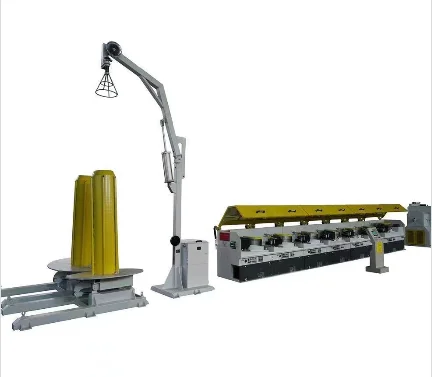
The integration of a Spring Winding Machine and a Gabion Wire Mesh Cutting Machine into the production line creates a seamless workflow from raw wire spool to finished basket. By automating the cutting process, manufacturers can ensure that every cage is identical in dimension, which is critical for the interlocking assembly required in large-scale gravity retaining walls.
The trajectory of wire mesh manufacturing is moving toward "closed-loop" quality control. Future iterations of the gabion wire mesh machine will likely incorporate real-time sensor feedback to monitor wire tension and twist angles during the weaving process, automatically adjusting servo speeds to compensate for material variances in the raw wire.
Additionally, there is an increasing focus on material diversification. While galvanized steel remains the industry standard, the development of hybrid coatings and high-tensile alloys requires machines that can handle higher stress levels without increasing tool wear. This will necessitate even more robust frame designs and advanced lubrication systems.
As the industry evolves, the ability to rapidly prototype custom mesh sizes for specific environmental challenges—such as extreme saline environments in coastal areas—will differentiate market leaders. The shift from static machinery to programmable, flexible platforms is already underway.
Selecting the right machine configuration depends on the target application's load requirements. For instance, basic erosion control may only require a 2.0mm wire, whereas heavy-duty retaining walls demand the upper limit of the machine's capability.
The following matrix outlines how different equipment configurations align with specific industrial needs. This is a guide for buyers to evaluate the necessary technical specifications based on their project profiles.
It is important to note that the PLC-driven heavy type remains the most versatile option due to its ability to switch between twist counts without mechanical overhaul.
| Configuration Profile | Wire Diameter | Twist Capacity | Primary Use Case |
|---|---|---|---|
| Basic Grade | 2.0 - 2.5mm | 3 Twists | Light Soil Stabilization |
| Standard Duty | 2.5 - 3.0mm | 5 Twists | Riverbank Protection |
| High-Duty Heavy | 3.0 - 4.0mm | 7 Twists | Gravity Retaining Walls |
| Precision Custom | Custom Range | PLC Switchable | Specialized Engineering |
| Automated Line | Integrated | Servo-Controlled | High-Volume Production |
| Industry Baseline | 2.0 - 3.0mm | 5 Twists | General Infrastructure |
The number of twists determines the mechanical lock between the weaving wires. A 3-twist weave is suitable for lightweight baskets, whereas a 7-twist weave provides maximum resistance to unfolding under heavy stone loads. PLC-controlled machines allow for one-key switching between these options, enabling producers to meet various international structural standards (such as ASTM or EN) without changing the physical hardware of the machine.
The dual-rack design ensures that power is applied to both the front and rear sections of the weaving mechanism. This synchronization prevents the "pulling" effect that occurs in single-rack machines, where the mesh may become tighter on one side than the other. By distributing the force, the machine maintains a consistent mesh size (e.g., 80x100mm) across the entire width of the fabric, which is critical for the stability of the final gabion cage.
The timed circulation lubrication system is designed to minimize manual intervention. Maintenance primarily involves monitoring the oil levels in the fully enclosed tanks and replacing filters to ensure no metal shavings or dust enter the motion mechanism. Because the system cleans the mechanism while lubricating, the interval between major overhauls is significantly extended compared to manual greasing systems, reducing operational downtime.
The heavy-type machine is specifically engineered for a range of 2.0mm to 4.0mm. Attempting to use wire significantly thicker than 4.0mm may exceed the torque limits of the servo motors and put undue stress on the double-rack frame. For requirements exceeding 4.0mm, specialized industrial weaving equipment would be necessary. Buyers should always verify the wire tensile strength and diameter against the manufacturer's technical parameters.
Traditional cams require physical timing adjustments and electronic programming that is often cumbersome. PLC control allows the operator to adjust the thorn shaft's rotation—switching between intermittent and continuous states—through a digital interface. This means the machine can be calibrated in real-time during operation, drastically reducing the setup time for new mesh sizes or twist configurations from several hours to just a few minutes.
Mesh width selection should be based on the most common basket sizes required by your target market. While a width of 5600mm is standard, customization is often available. It is important to consider the footprint of the machine in your factory and the handling capabilities of your staff. A wider mesh allows for fewer seams in the final cage, which generally improves the structural integrity of the gabion wall.
The transition toward PLC-driven, heavy-duty weaving systems represents a necessary evolution in the production of erosion control materials. By replacing mechanical cams with servo precision and implementing a powered dual-rack architecture, manufacturers can now produce gabion mesh that meets the most stringent civil engineering tolerances while maintaining the flexibility to adapt to custom project specifications.
For stakeholders in the construction and infrastructure sectors, the practical implication is clear: investment in a high-mass, intelligently controlled gabion wire mesh machine reduces long-term operational costs by minimizing downtime and eliminating waste caused by weave inconsistency. As global infrastructure projects grow in scale and complexity, the reliability of the production equipment becomes the primary safeguard of the final structure's integrity.