The global demand for specialized fencing and industrial screening has led to a significant evolution in wire weaving technology. Among these advancements, the hexagonal wire mesh machine stands out as a critical piece of equipment for producing durable, flexible, and versatile mesh structures used across various sectors. By automating the complex twisting process, these machines ensure consistent mesh geometry and structural integrity.
Modern industrial requirements demand a balance between production speed and material precision. Whether it is for agricultural containment, pipeline insulation, or architectural decoration, the ability to control wire diameter and mesh size is paramount. The integration of PLC systems and horizontal mechanical structures has transformed how these machines operate, moving away from labor-intensive manual processes to high-efficiency automated systems.
For businesses looking to scale their production of chicken wire or industrial screens, investing in a high-quality hexagonal wire mesh machine is the most effective way to reduce overhead and increase output. By leveraging new designs that allow for a minimum mesh size of 10mm, manufacturers can now enter niche markets that were previously inaccessible with older, bulkier equipment.

Technical Innovation in Hexagonal Wire Mesh Production
The latest generation of the hexagonal wire mesh machine introduces a positive twisted design that significantly enhances the precision of the weave. One of the most striking technical breakthroughs is the ability to produce a minimum mesh size of 10mm, allowing for much tighter weaves that are essential for specialized breeding and insulation projects. This level of precision ensures that the finished product meets strict industrial standards for gap size and tension.
Beyond size precision, these innovations focus on stability and speed. By optimizing the twisting mechanism, the machines can handle a wide range of wire diameters, from 0.38mm up to 1.5mm, without sacrificing the consistency of the hexagonal shape. This versatility makes the equipment a comprehensive solution for factories that need to produce multiple product lines using a single machine footprint.
Core Operational Components and PLC Integration
At the heart of the modern hexagonal wire mesh machine is the Programmable Logic Controller (PLC), which simplifies the complex synchronization required for twisting and winding. The PLC system removes the need for constant manual adjustment, allowing operators to set parameters digitally and ensure a repeatable, high-quality output across thousands of meters of mesh.
Labor efficiency is one of the most significant gains from this automation. In traditional setups, multiple skilled technicians were required to monitor every stage of the weaving process. With the current PLC-driven architecture, as few as two people can operate the entire system, drastically reducing long-term labor costs and minimizing the risk of human error during production.
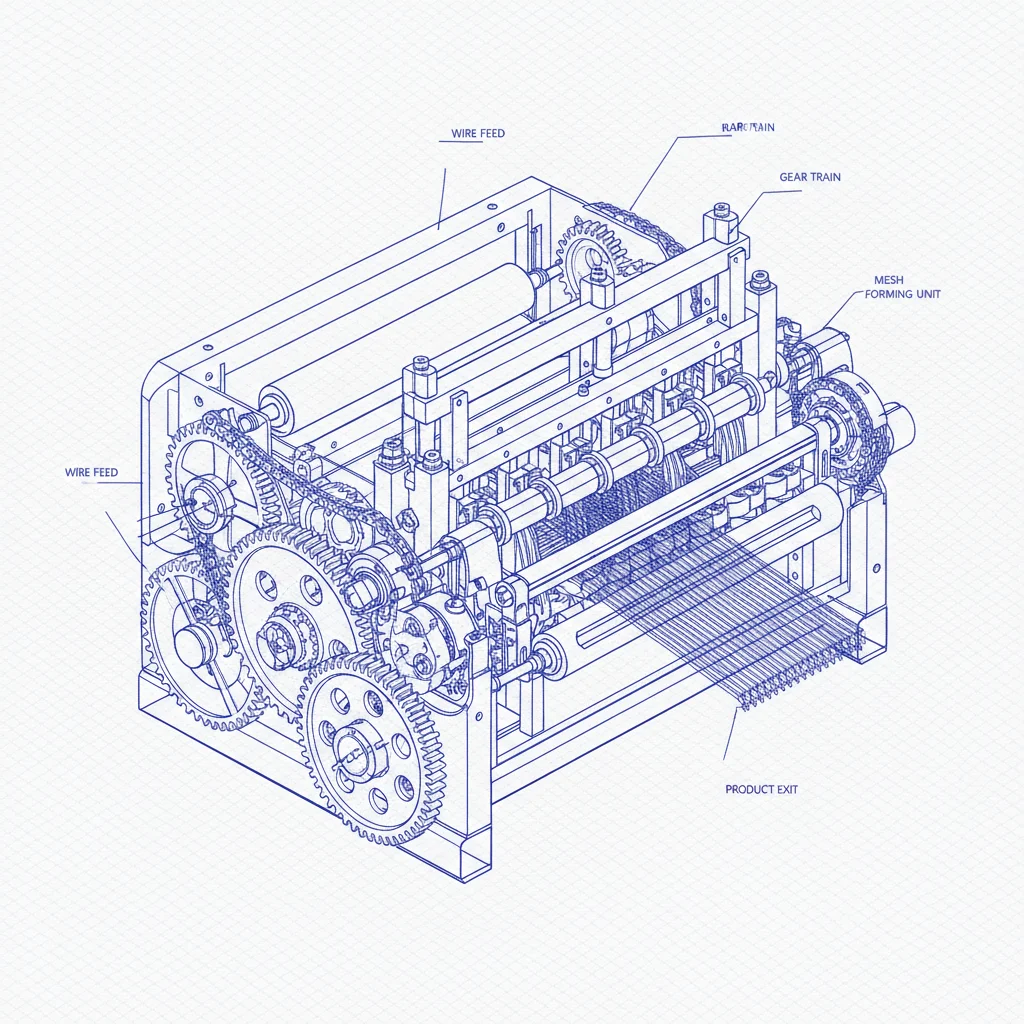
Complementing the PLC are the specialized spool and spring winding machines. These auxiliary components ensure that the wire is fed into the weaving mechanism with constant tension, which is critical for preventing deformations in the hexagonal cells. This integrated ecosystem creates a seamless flow from raw wire to finished mesh roll.
Material Versatility and Wire Compatibility
A primary strength of the current hexagonal wire mesh machine is its ability to process diverse materials. The machine is engineered to weave both galvanized iron wire and plastic-coated wire, ensuring that the resulting mesh is suitable for both corrosive outdoor environments and decorative indoor uses.
By supporting coated wires, the hexagonal wire mesh machine allows manufacturers to produce specialized products for pipeline insulation and floral decoration. The coating prevents the metal from oxidizing and provides a smoother finish, which is essential for high-end wedding flower arrangements and artistic installations.
The flexibility in material handling extends to the wire diameter range. Whether the project requires a fine 0.38mm wire for delicate screening or a heavy-duty 1.5mm wire for industrial fencing, the machine can be calibrated to maintain the structural integrity of the hexagonal twist regardless of the material's thickness or coating.
Production Efficiency and Cost Reduction Analysis
The drive toward industrial optimization has led to a redesigned machine footprint that is both compact and energy-efficient. By reducing the overall volume of the equipment, factories can maximize their floor space, while the optimized motor systems significantly lower electricity consumption per unit of mesh produced.
When comparing operational costs, the combination of reduced energy usage and minimized labor requirements creates a compounding effect on profitability. The transition to automated twisting ensures that scrap rates are lowered, as the precision of the machine eliminates the common defects found in manual or semi-automated weaving.
Performance Comparison of Hexagonal Wire Mesh Machine Configurations
Global Industrial Applications of Hexagonal Mesh
The output of a hexagonal wire mesh machine finds application in an astonishing array of industries. In agriculture, it is the gold standard for poultry breeding and small animal enclosures, where the hexagonal structure provides the necessary strength and flexibility to conform to uneven terrain.
Beyond farming, the mesh is vital for industrial insulation. Specifically, it is used as a reinforcing layer for pipeline insulation, preventing the lagging material from sagging or shifting over time. Additionally, its aesthetic appeal has made it a favorite in the floral and event industry for wedding flower arrangements and sophisticated garden decorations.
Engineering Advantages of Horizontal Machine Structures
The adoption of a horizontal structure in the latest hexagonal wire mesh machine design is a strategic engineering choice. Unlike vertical or angled configurations, a horizontal layout allows for a more balanced distribution of mechanical stress, which results in a smoother run and significantly reduced vibration during high-speed operation.
Reduced vibration is not just about noise; it directly impacts the quality of the twist. When the machine runs smoothly, the wire is less likely to snap or slip, ensuring that every hexagonal cell is identical in size. This mechanical stability also extends the lifespan of the machine's wearable parts, reducing the frequency of maintenance shutdowns.
Furthermore, the horizontal arrangement simplifies the feeding and collection process. Raw wire spools can be positioned for optimal delivery, and the finished mesh can be wound onto rolls with minimal tension variance, making the final product easier to transport and install for the end-user.
Comprehensive Machine Parameter Specifications
Selecting the right configuration for a hexagonal wire mesh machine depends entirely on the target mesh size and wire diameter. The machine is designed to be adaptable, with parameters ranging from 10mm to 55mm mesh sizes to accommodate everything from fine screening to heavy-duty fencing.
The motor power is scaled according to the wire diameter, ranging from 3KW for fine wires up to 15KW for the heaviest gauge materials. This ensures that the machine always operates within its optimal power band, avoiding overheating while maintaining a consistent production speed across different materials.
To provide a clear overview of the capabilities, the following table details the specific technical parameters for various mesh size configurations, illustrating how wire diameter and motor power scale with the size of the hexagonal cell.
Core Technical Parameters for Hexagonal Wire Mesh Machine Configurations
| Mesh Size (mm) |
Wire Diameter (mm) |
Motor Power (KW) |
Typical Application |
| 10mm |
0.38 - 0.5 |
3 |
Floral & Decoration |
| 25mm |
0.38 - 0.9 |
5 |
Poultry Breeding |
| 33mm |
0.38 - 1.2 |
7 |
General Fencing |
| 44mm |
0.4 - 1.5 |
10 |
Pipeline Insulation |
| 55mm |
0.5 - 1.5 |
15 |
Industrial Barriers |
| Custom |
As Required |
Variable |
Specialized Industrial |
FAQS
The latest innovative designs can produce a minimum mesh size of 10mm. This is particularly useful for specialized applications like floral arrangements and high-precision breeding cages where smaller openings are required to prevent escapes or provide better support.
The machine is designed for versatility and can weave both galvanized iron wire and PVC-coated wire. This allows you to create weather-resistant products for outdoor fencing as well as aesthetically pleasing mesh for indoor decorative use.
Thanks to the integration of PLC equipment, the operation is significantly simplified. A fully functional production line can be managed by just two people, which helps factories greatly reduce their long-term labor expenses.
Small hexagonal mesh is widely used for pipeline insulation, animal breeding, floral decorations, wedding flower arrangements, and various types of garden fencing. Its flexibility and strength make it ideal for wrapping and containment.
A horizontal structure ensures the machine runs more smoothly by reducing vibration and balancing mechanical stress. This leads to a more consistent weave, less wire breakage, and a longer overall lifespan for the machinery components.
Yes, the machines can be configured to manufacture customized types based on specific project needs. Whether you need a specific mesh width or a non-standard wire diameter, the equipment can be tailored to meet those technical requirements.
Conclusion
The evolution of the hexagonal wire mesh machine has bridged the gap between industrial durability and production efficiency. By combining PLC automation, a stable horizontal structure, and the ability to process both galvanized and coated wires, these machines provide a comprehensive solution for diverse market needs. From the precision of 10mm mesh for floral art to heavy-duty fencing for industrial use, the technical versatility ensures that manufacturers can remain competitive in a demanding global market.
As industry trends lean further toward automation and energy efficiency, investing in advanced weaving technology is no longer optional but a necessity for growth. We recommend that producers focus on equipment that reduces labor costs and minimizes environmental impact through lower power consumption. To explore our full range of high-efficiency weaving solutions, visit our website: www.htmeshmachines.com