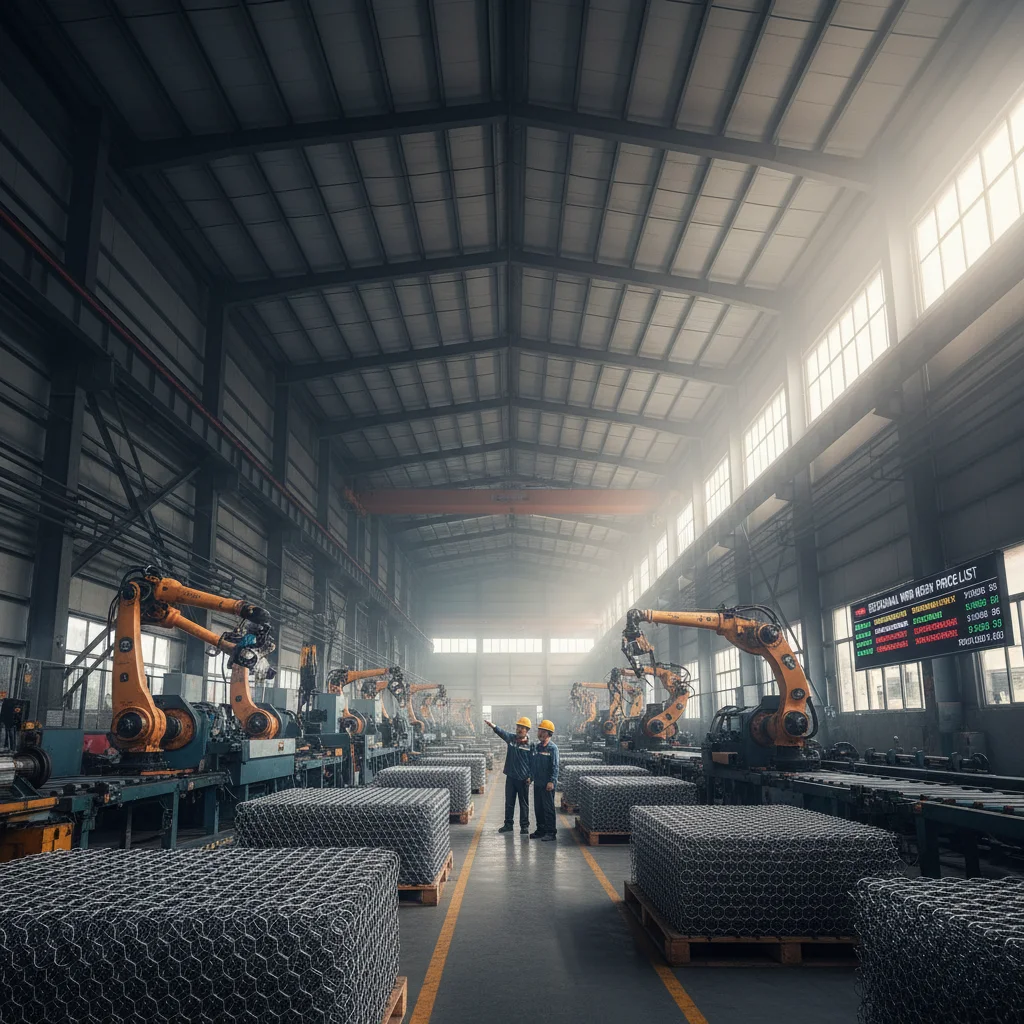
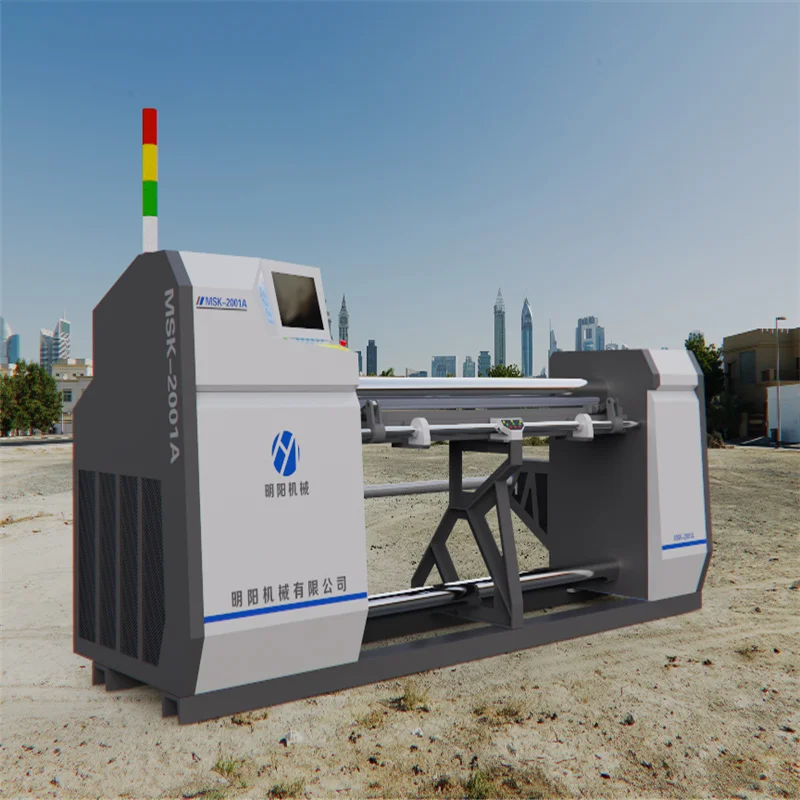
The global demand for sustainable infrastructure and erosion control has placed the gabion wire mesh machine at the forefront of industrial manufacturing. As cities expand into challenging terrains and coastal regions face increasing instability, the need for high-strength, flexible stone-filled cages—known as gabions—has skyrocketed, necessitating high-precision automated production.
Understanding the mechanics and capabilities of a modern gabion wire mesh machine is essential for manufacturers aiming to optimize their output and ensure structural integrity. These machines bridge the gap between raw galvanized steel wire and the heavy-duty mesh required for retaining walls, riverbank protection, and military fortifications.
By leveraging advanced PLC controls and servo motor technology, today's equipment minimizes material waste while maximizing weaving speed. This evolution not only improves the cost-efficiency of civil engineering projects globally but also promotes the use of natural materials in tandem with industrial precision.

Global Relevance of Gabion Wire Mesh Machine
In the context of global infrastructure, the gabion wire mesh machine plays a critical role in disaster risk reduction and environmental management. According to standards aligned with ISO and various civil engineering benchmarks, gabion structures are preferred for their permeability and flexibility, making them superior to rigid concrete in seismic zones or areas prone to soil subsidence.
The challenge for the industry has traditionally been the balance between weaving speed and the structural stability of the "double twist" lock. A low-quality weave can lead to cage failure under the weight of heavy stone fill, which poses a risk to public safety. Consequently, the transition toward PLC-heavy automated machinery has been a game-changer for global supply chains.
Defining the Gabion Wire Mesh Machine
A gabion wire mesh machine is a specialized industrial weaving system designed to produce heavy-duty hexagonal mesh. Unlike standard fence weaving, this machine creates a unique interlocking structure where the wires are twisted together, ensuring that the mesh does not unravel even if a single wire is cut. This "double-twist" mechanism is the cornerstone of the machine's design.
From a humanitarian perspective, these machines enable the rapid production of materials used in emergency flood barriers and landslide prevention. By automating the process of twisting wires with diameters ranging from 2.0mm to 4.0mm, these machines allow for the scalable production of cages that protect vulnerable communities in remote mountainous regions.
In modern industry, the gabion wire mesh machine is no longer just a mechanical loom but a sophisticated mechatronic system. The integration of servo motors and PLC (Programmable Logic Controller) data allows operators to switch between different twist counts—such as 3, 5, or 7 twists—with a single key press, adapting the product's strength to specific project requirements.
Core Components of High-Performance Machinery
The durability of a gabion wire mesh machine starts with its frame. Heavy-duty models often feature a patented integrated double-rack design, which minimizes vibration during high-speed operation. This stability is crucial because any oscillation can lead to inconsistencies in the mesh size, potentially compromising the structural integrity of the resulting gabion baskets.
Precision is driven by the power source; all modern high-end systems utilize servo motors rather than traditional induction motors. This allows the gabion wire mesh machine to achieve higher machining accuracy and faster weaving speeds, while simplifying the debugging process. The ability to adjust equipment in any operating state ensures that downtime is kept to an absolute minimum.
Lubrication and maintenance are often overlooked but are vital for longevity. Top-tier machinery incorporates fully enclosed lubricating oil tanks with timed circulation methods. This system prevents dust and metallic impurities from entering the motion mechanism, ensuring that the gabion wire mesh machine maintains its precision over years of continuous heavy-duty use.
Practical Applications and Global Use Cases
The output of a gabion wire mesh machine is utilized across a diverse array of sectors. In Europe and North America, gabions are frequently used for architectural landscaping and urban noise barriers, blending industrial strength with natural aesthetics. In contrast, in Southeast Asia and Africa, the focus is primarily on hydraulic engineering and riverbank stabilization to prevent erosion during monsoon seasons.
In post-disaster relief operations, the ability to quickly deploy gabion cages is life-saving. For example, in regions hit by earthquakes, mesh produced by a high-capacity gabion wire mesh machine can be used to stabilize slopes and prevent secondary landslides, providing a reliable and fast solution for securing temporary roads and shelters.
Performance Comparison of Gabion Wire Mesh Machine Models
Tangible Advantages and Long-Term Value
Investing in a high-quality gabion wire mesh machine offers immense long-term financial and environmental value. By reducing the reliance on poured concrete, which has a high carbon footprint, the use of stone-filled gabions promotes a more sustainable approach to construction. The flexibility of the mesh allows it to settle and deform without losing its structural integrity, significantly reducing long-term maintenance costs.
Beyond the logical benefits of cost and sustainability, there is a profound element of trust and safety. When a gabion wire mesh machine produces mesh with precise twist counts and consistent wire tension, engineers can confidently deploy these structures in high-risk zones. This reliability ensures the safety of the people living behind retaining walls and the longevity of the infrastructure protecting our coasts.
Future Trends in Mesh Weaving Automation
The future of the gabion wire mesh machine is inextricably linked to the digital transformation of the manufacturing sector. We are seeing a shift toward "Smart Factories" where IoT (Internet of Things) sensors are integrated into the machine's frame to monitor wear and tear in real-time. This predictive maintenance will eliminate unexpected downtime and extend the lifespan of the equipment.
Material innovation is also playing a key role. While galvanized steel remains the standard, there is growing interest in high-strength polymer-coated wires to resist corrosion in extreme saltwater environments. Modern machines are being adapted to handle these new materials without sacrificing weaving speed or the integrity of the double-twist lock.
Furthermore, automation is extending beyond the weaving process. The integration of automatic cutting and folding units allows for a seamless transition from a roll of mesh to a finished, ready-to-ship gabion basket. This end-to-end automation reduces labor costs and minimizes the human error associated with manual cutting and assembly.
Overcoming Operational Challenges
One of the most common challenges in operating a gabion wire mesh machine is the complexity of the debugging process, particularly when switching between different mesh sizes. Traditional electronic cam programming was often cumbersome and time-consuming. However, the introduction of PLC-driven dual twist data has simplified this, allowing for one-key switching between 3, 5, and 7 twists.
Another significant hurdle is the accumulation of metallic dust and debris, which can cause premature wear on the thorn shaft and other moving parts. The solution lies in the adoption of timed circulation lubrication and fully enclosed oil tanks. This approach not only lubricates the mechanism but also acts as a cleaning agent, flushing out impurities that would otherwise cause friction and damage.
Finally, the issue of space efficiency in the factory is often a concern. By implementing a patented integrated double-rack design, manufacturers can now operate high-capacity equipment within a smaller footprint. This streamlined structure makes the gabion wire mesh machine safer and more stable, reducing the risks associated with heavy machinery movement.
Technical Specifications and Performance Analysis of Gabion Weaving Systems
| Machine Model |
Wire Diameter Range |
Control System |
Stability Score (1-10) |
| Standard PLC Model |
2.0mm - 3.0mm |
Basic PLC |
7 |
| PLC Heavy Type |
2.0mm - 4.0mm |
Advanced PLC |
9 |
| Servo-Driven Pro |
2.0mm - 4.0mm |
Full Servo PLC |
10 |
| Custom Industrial |
Up to 5.0mm |
Custom PLC |
8 |
| Eco-Series Weaver |
2.0mm - 3.5mm |
Standard PLC |
7 |
| Ultra-Heavy Duty |
3.0mm - 4.0mm |
Dual-Servo PLC |
10 |
FAQS
Most heavy-duty PLC models, including our high-end series, can handle wire diameters ranging from 2.0mm up to 4.0mm. For extremely specialized industrial needs, custom configurations may be available, but 4.0mm is the industry standard for heavy-duty gabion baskets used in riverbank stabilization and retaining walls.
The gabion wire mesh machine is engineered to twist the wires together in a specific interlocking hexagonal pattern. This ensures that the tension is distributed evenly. Unlike a simple weave, the double twist creates a mechanical lock; if one wire is severed, the surrounding twists hold the structure together, preventing the entire cage from failing.
Yes, modern PLC-equipped machines allow for significant customization. Through the PLC interface, operators can adjust the mesh size (e.g., 50x70mm, 60x80mm, or 80x100mm) and switch between 3, 5, or 7 twists with a single key press, making the equipment highly versatile for various project requirements.
The most critical maintenance is the lubrication system. Using timed circulation lubrication and enclosed oil tanks prevents dust and impurities from damaging the motion mechanism. Regularly checking the servo motor calibrations and the condition of the thorn shaft is also recommended to maintain high machining accuracy and weaving speed.
Servo motors provide precise control over the movement and timing of the weaving process. This leads to higher accuracy in the mesh dimensions, faster weaving speeds, and a much easier debugging process. It eliminates the need for complex electronic cam programming, allowing for smoother operation and reduced material waste.
Absolutely. The patented integrated double-rack design provides a more streamlined and stable structure, which significantly reduces vibration during high-speed operation. This not only improves the quality of the mesh but also makes the equipment safer for operators by reducing the footprint and increasing the structural rigidity of the machine.
Conclusion
The gabion wire mesh machine represents a critical intersection of mechanical engineering and environmental stewardship. By automating the production of high-strength, double-twisted hexagonal mesh, these machines enable the creation of sustainable infrastructure that protects our landscapes and communities. From the precision of servo-driven controls to the durability of integrated double-rack designs, the evolution of this machinery has significantly lowered the barriers to producing professional-grade erosion control solutions.
Looking forward, the integration of AI-driven predictive maintenance and the adoption of eco-friendly coated materials will further enhance the value proposition of these systems. For manufacturers and civil engineering firms, investing in high-precision, PLC-controlled equipment is no longer an option but a necessity to remain competitive in a global market that demands both efficiency and reliability. To explore the best solutions for your production needs, visit our website: www.htmeshmachines.com